
I didn’t plan to become a pasta designer. It happened slowly, almost by accident.
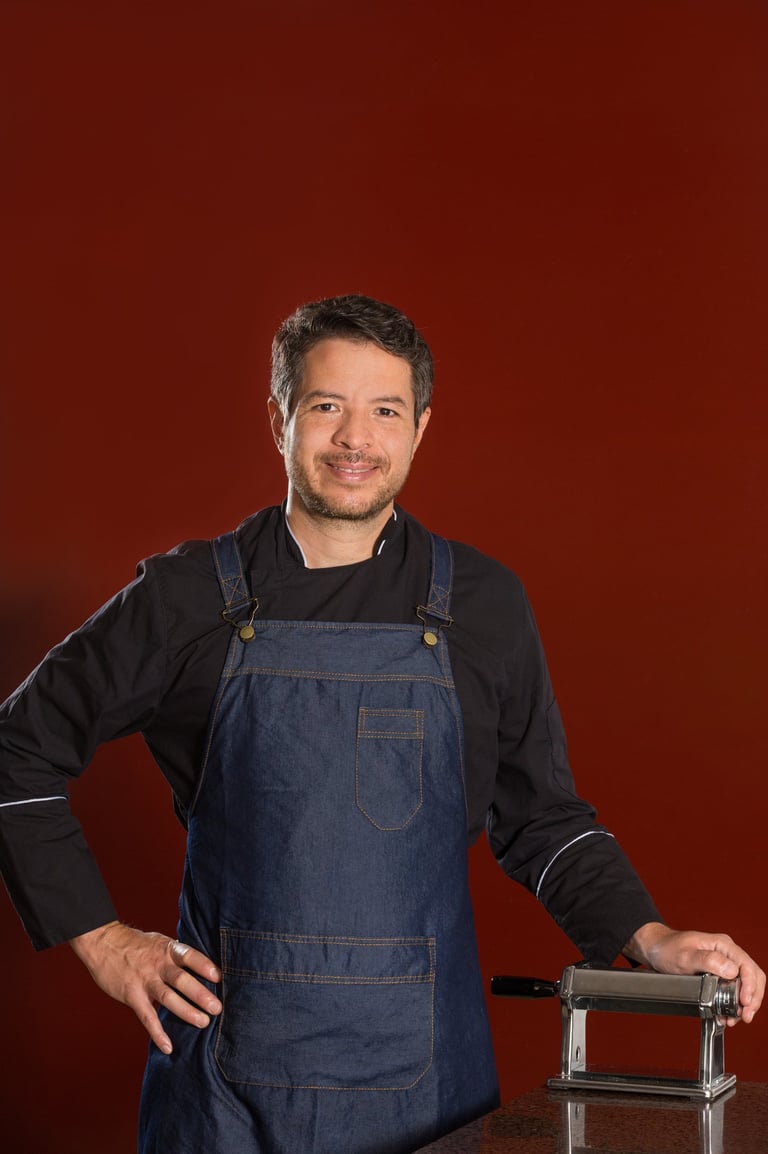
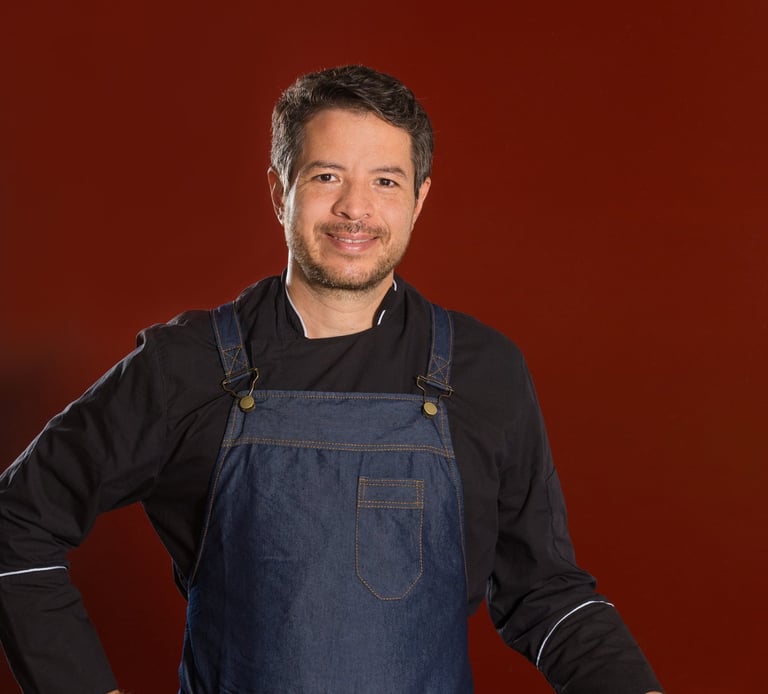
I'm Venezuelan and I've lived in Brazil for about twelve years. Before pasta, my life revolved around science, I studied Chemistry in Venezuela, did my PhD in Spain, and worked as a researcher in different countries in Europe.
Labs, experiments, data. That was my world. When I moved to Porto Alegre to continue my academic work, I was also quietly looking for something else, even if I didn't know it yet.
That something else had a name I'd carried for years, gastronomy. I had always wanted to study it formally, and in Porto Alegre I finally saw the opportunity. So in 2016, while still working at the university as a researcher, I enrolled in a professional culinary program, two worlds running in parallel, the lab during the day, the kitchen at night.
During those culinary studies, I started making fresh pasta. At first it was curiosity, just flour, eggs, water, simple things turning into something alive. I began making pasta all the time, testing textures and techniques until color appeared. Natural colors, small variations, unexpected results. That's when it stopped being just food and started feeling like a language.
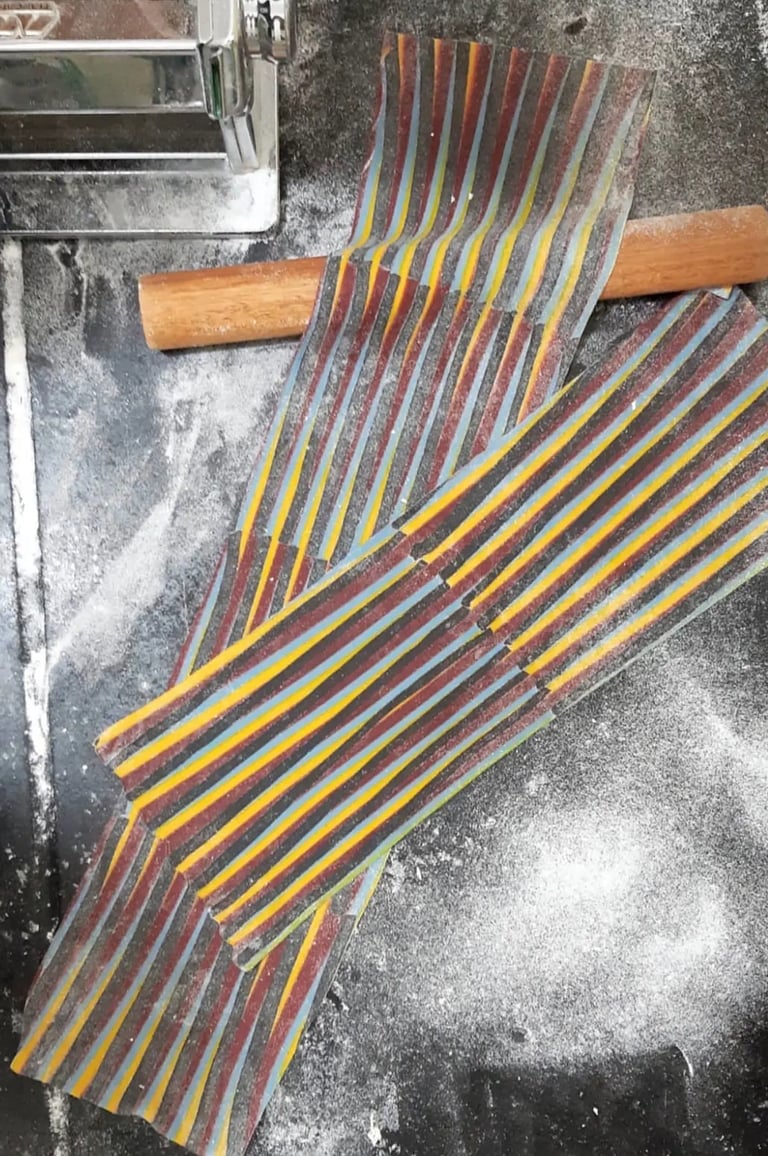
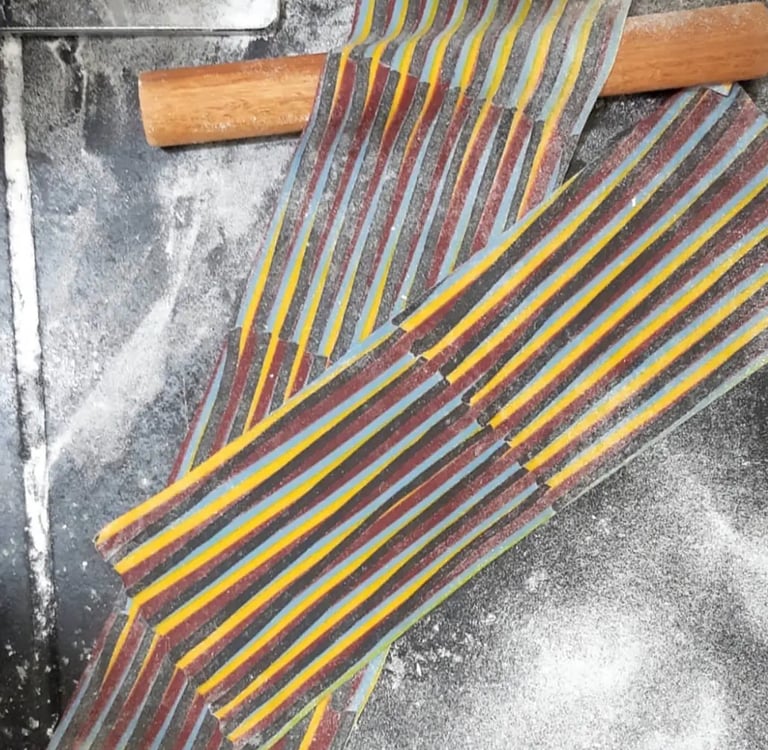
In 2019 I made a pasta sheet inspired by the work of Carlos Cruz-Diez, one of the most important Venezuelan kinetic artists and a personal reference. Recreating his work in pasta changed everything, seeing art translated into dough made me realize that pasta could be more than a vehicle for sauce. It could carry ideas, memory, identity.
From that moment on, I started seeing pasta as a canvas. If chefs can create art on a plate, why couldn't pasta itself be part of that expression? I began studying it the same way I used to study chemistry, ingredients, natural colors, structure, researching, failing, adjusting, trying again. I also looked outside gastronomy, learning from crafts like ceramics, glass, and textiles, anything where hands, material, and time matter.
During the pandemic, that process intensified. With time to experiment and no clear rules to follow, my work became more personal and more precise. Pasta design, for me, feels like being back in a lab but with intuition playing a bigger role, my scientific background helps me understand what's happening, and my love for food is what keeps it alive.
Everything I make is done by hand, with no industrial machines and no shortcuts, just simple tools, patience, and methods developed over years of trial and error. I work only with flour, eggs or water, and natural colors, and each pigment behaves differently, each dough has its own mood. You never fully control the result, and that uncertainty is part of the beauty.
What happened next was gradual and unplanned. People started finding my work through social media, chefs, food lovers, designers from different parts of the world, and slowly I understood that what I was making resonated beyond my own kitchen. Then came the question I hadn't expected, are you selling your pasta? More and more people were asking, and that's when I realized this wasn't just a passion project but something with a life of its own.
For a while I kept both paths running, researcher and pasta designer, but eventually one had to win. I left my work as a chemist to dedicate myself fully to pasta design.
Today, I create pasta with my own designs, develop custom pieces, and collaborate with chefs, brands, and creative projects. I'm still experimenting, still learning, still chasing that moment when technique, color, and flavor fall into place.
This is not just pasta. It's the result of curiosity, obsession, mistakes, and love for the process.